Developing AI for medical imaging
In the rapidly evolving world of healthcare, the primary bottleneck isn’t a lack of scientific discovery, it’s the engineering gap. While academic research consistently produces groundbreaking AI methodologies for medical imaging, a vast majority of these innovations never leave the whiteboard. Transforming a theoretical model into a robust, scalable tool that functions within the high-stakes environment of a clinic requires a fusion of rigorous engineering discipline and deep clinical context.
XDMD was founded to solve this translation problem. They are an engineering company focused on medical imaging. They build custom-made AI solutions in close collaboration with clinical and industrial partners for radiology, pathology or any other domain where medical images are used. The company combines strong engineering discipline with deep domain understanding, helping their clients to achieve state-of-the-art performance and faster time-to-market.
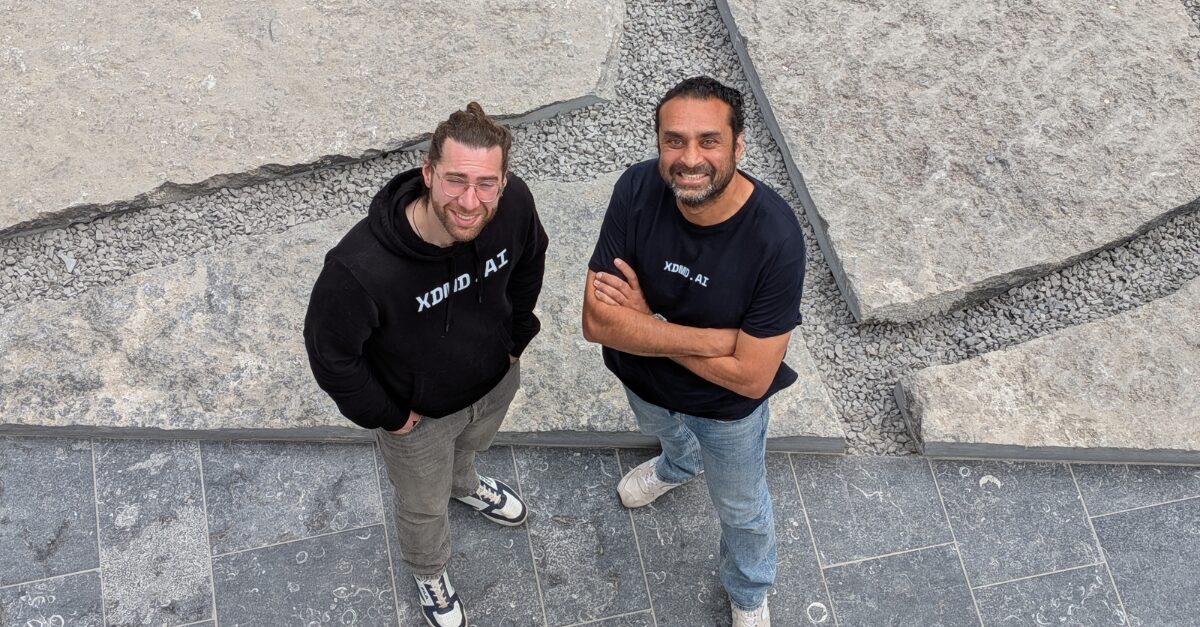
Meet the team
Dr.ir. Rashindra Manniesing is the founder of XDMD. He previously spent his career as an academic researcher in medical imaging, authoring over 70 publications in the field.
Dr. Gastón Creci is the AI engineer of XDMD. With a background in theoretical physics, he approaches medical imaging from first principles.
XDMD is supported by an advisory board of leading scientists in medical imaging and AI, including Prof. Chris de Korte (Radboudumc), Prof. Jonas Teuwen (Netherlands Cancer Institute), Prof. Marcel van Gerven (Radboud/Donders), , and Prof. Thijs Vande Vyvere (Antwerp University Hospital).
What inspired you to start XDMD?
I have always been an engineer at heart. Building things and understanding how they work is what drives me. After years of research in medical imaging, I watched the field change fundamentally with the rise of AI. For many problems in medical imaging the question is no longer which methodology to publish, because we know what works. The question is whether it actually gets built and deployed. Can we get it to work in clinical practice and at scale? That combination, a drive to build and a field ready to be built, is what led me to start XDMD. It is highly motivating to know that what often starts at the whiteboard eventually ends up in products that improve the lives of patients.
How does XDMD approach challenges like data quality, regulation, and clinical integration?
Data is the hardest one. Collecting enough representative data and producing high quality reference standards is a real challenge. It also depends on what the client needs. For a proof of concept, a few datasets may be sufficient. For a product that needs to work globally at scale, it is a different problem entirely. In practice, clients often bring their own data, and there are publicly available datasets for many domains.
There are also commercial data brokers such as Segmed.ai that act as intermediaries between hospitals and companies.
Regulation depends on the TRL level and target market, but we account for it early in the process. We support clients in preparing technical documentation and software files, and where needed we bring in specialized partners. Clinical integration is the client’s responsibility. Our role is to develop the AI for the medical imaging component in their product. Getting that product to market is their domain.
How do you see AI transforming radiology and pathology in the next 5–10 years?
AI will continue to take over tasks in radiology and pathology. The market is already consolidating around platform-based solutions. And yet AI development in this domain never stops. New scanners and new and more imaging data, new clinical insights, new patient populations – a deployed model needs to be monitored, updated, and sometimes rebuilt from scratch. That means there will always be demand for people who know how to develop these systems. That is exactly what XDMD is here for.
Check them out